
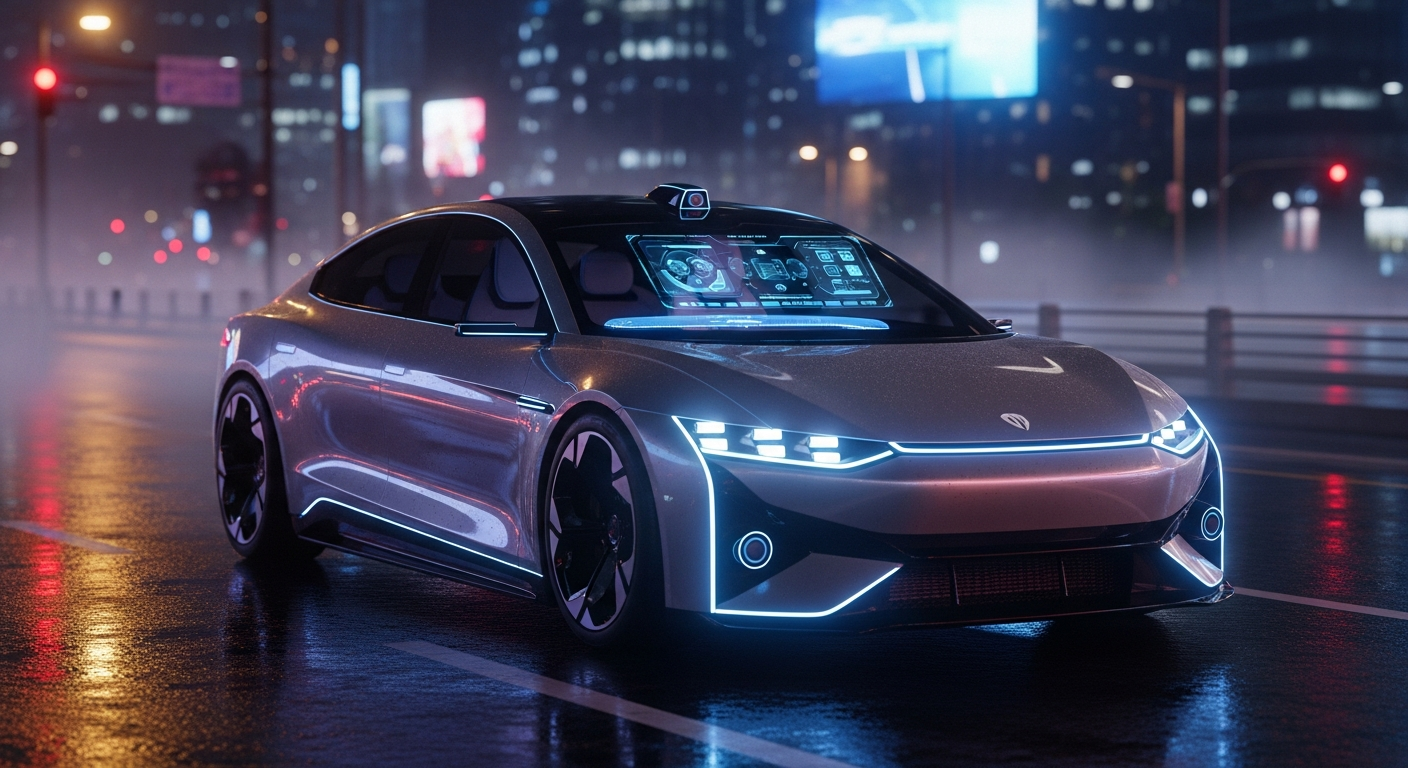
The world of Artificial Intelligence (AI) is quickly joining the automotive industry together with the electric vehicle (EV) technology. Most of the major corporations such as Tesla, BYD and Toyota are pumping millions into this change. AI-powered EVs are not only environmentally friendly vehicles but they are smart machines that are able to learn, adapt and enhance overall driving experience.
What are AI-powered Electric Vehicles?
Electric cars powered by AI are the combination of clean energy systems and the latest technologies of artificial intelligence. These cars apply information, sensors, and machine learning algorithms to make real-time choices, improve their performance and give a smarter driving experience. They do not need user intervention to learn, as did traditional vehicles, but they continually learn based on the behavior of the user and the environment.
Important characteristics of AI-Powered EVs.
- Autonomous Driving: AI makes it possible to drive autonomously and to have driver assistance systems.
- Smart Navigation: Traffic information in real time and optimal route.
- Predictive Maintenance: Early faults based on a data analysis.
- Energy Management: Maximized battery life and energy consumption.
- Linked Ecosystem: Interaction with smart devices and cloud solutions.
Technologies at the core of AI EVs.
- Machine Learning Algorithms: The vehicles will be able to learn and get better with time.
- Computer Vision Systems: Assist in recognition of objects, pedestrians and road signs.
- IoT Connectivity: Connect cars to the infrastructure and networks.
- Big Data Analytics: Process a lot of driving and performance data.
- Cloud Computing: Provides the real-time updates and remote controlling of vehicles.
The ways in which AI is changing electric cars.
Self-driving technologies.
In facilitating the use of autonomous driving, AI is imperative. Autopilot is one of such systems and it consists of cameras, radar and neural networks to understand the conditions on the road and make driving decisions. This will minimize human error and increase safety particularly in highways and in complicated traffic conditions.
Predictive Maintenance
Artificial intelligence-based EVs will be able to check on the inside parts and identify possible problems before they escalate into major problems. Through the analysis of the vehicle data, such systems will alert users on the requirement of vehicles in terms of maintenance, this will help to eliminate cases of vehicles that suddenly breakdown and extend their lifespan.
Energy Optimization
AI has a considerable effect on enhancing battery life by learning about driving patterns, the environment, and weather patterns. It regulates power consumption dynamically making sure the maximum range and minimizing energy waste are guaranteed. It can be used particularly in long-distance travelling and during day to day commuting.
Positive outcomes of AI-Powered EVs.
Enhanced Safety
AI systems will be implemented in such a way as to respond faster than a human driver. The collisions, lane-keeping system, and emergency braking assistance are some of the features that minimize accidents. Constant check of the environs will guarantee a safer road.
Improved Efficiency
As AI will optimize energy consumption and the route, drivers will be able to have improved mileage and lower the frequency of charging. This ensures that EVs are more feasible and economical in the long-term.
Individualized Driving.
AI learns the drivers preferences such as seat setting, climate control and entertainment preferences. As time goes by, the vehicle becomes used to individual needs, thus presenting a highly customized and comfortable experience.
Environmental Sustainability
EVs already lessen the carbon emissions, and AI makes them even more efficient. Smart driving and maximized energy consumption lessens environmental imprint, and leads to a green future.
AI-powered EVs have several challenges.
Expensive Cost of development.
It would take a lot of research, technology, and infrastructure to develop AI-powered EVs. This usually translates to increased prices of vehicles making them less affordable to the average-income earners.
Data privacy issues.
The AIs are based on the accumulation of information such as driving patterns and positioning. This begs the question of the data storage, sharing and protection against cyber threats.
Infrastructure Limitations
The charging stations and intelligent road infrastructure are yet to develop in numerous areas. In the absence of the right infrastructure, the implementation of AI-powered EVs can be slowed down.
Regulatory Challenges
Regulatory authorities and governments are yet to come up with regulations on autonomous vehicles. The regulations of AI decision-making and liability are not completely established.
Future of AI-Powered electric vehicles.
Fully Autonomous Cars.
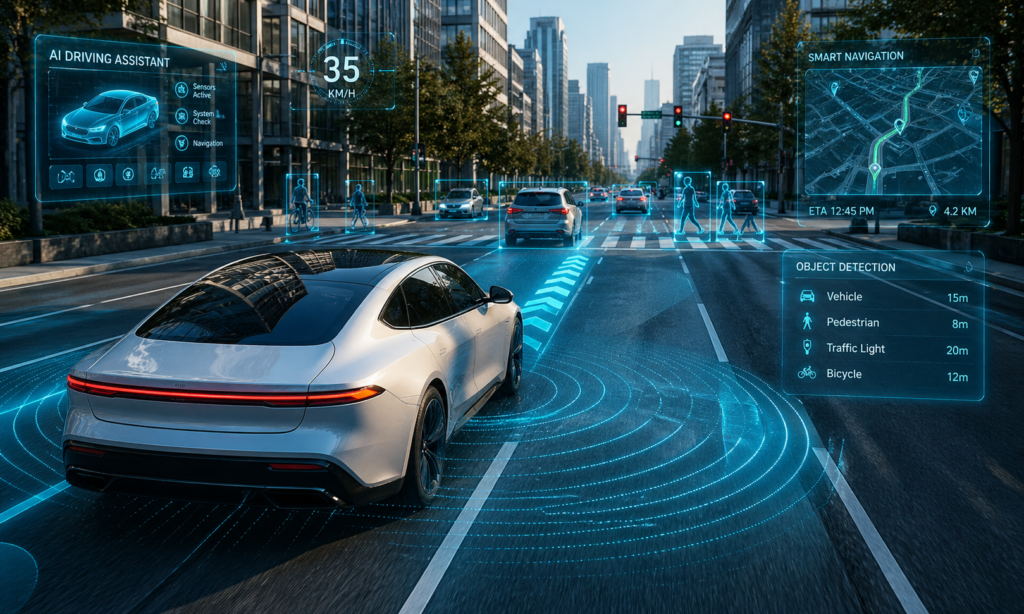
Firms such as Waymo are developing self-driving cars which do not need human intervention. This would be a game changer in terms of transportation and traffic accidents would be minimized.
Vehicle to Everywhere (V2X) Communication.
AI will facilitate vehicles to communicate with the traffic systems, other vehicles as well as infrastructure. This will enhance road traffic, decrease congestions and make the roads safer.
Integration in Smart City.
The EVs powered by AI will be an important element of smart cities. They will interface with cities systems to streamline transportation and minimize emissions as well as enhance general mobility.
Battery Advancements
Innovations in battery technology in the future will drive a greater range, decrease the time needed to charge the battery and make EVs more affordable to a broader audience.
Conclusion
The future of the automobile industry is the electric cars with AI, which integrate smarts with eco-friendliness. They provide more efficient and safe as well as highly personalized means of transportation. Though the cost, infrastructure, and regulations are some of the challenges, ongoing innovation, and investment around the globe are creating momentum in their use. With the advancement of technology, EVs with AI will become the predominant way of transportation and change the way we move and communicate with mobility systems.
FAQs
1. Why are AI-powered EVs being different to regular EVs?
The automation, optimization and smart decision-making of AI-powered EVs are achieved through artificial intelligence in comparison to regular EVs that are merely powered by electric propulsion systems.
2. Are electric vehicles that are powered by AI autonomous?
The fully autonomous AI-powered EVs are not all there yet. The majority of them currently have developed advanced driver assistance systems, with full self-driving technology being developed.
3. What is the advantage of AI in the battery of EVs?
AI is used to analyze driving habits, weather, and terrain to use the best amount of energy, this can be used to lengthen the battery life and enhance efficiency.
4. Are EVs with AI considered to be safe?
Indeed, AI-powered EVs have enhanced safety functions, such as collision detection, lane assistance, and automatic braking, and are safer than most conventional cars.
5. How is AI going to play out in EVs?
Fully autonomous driving, incorporation of smart cities, better battery technologies and connectivity are all part of the future and transportation will become more efficient and intelligent.
a