
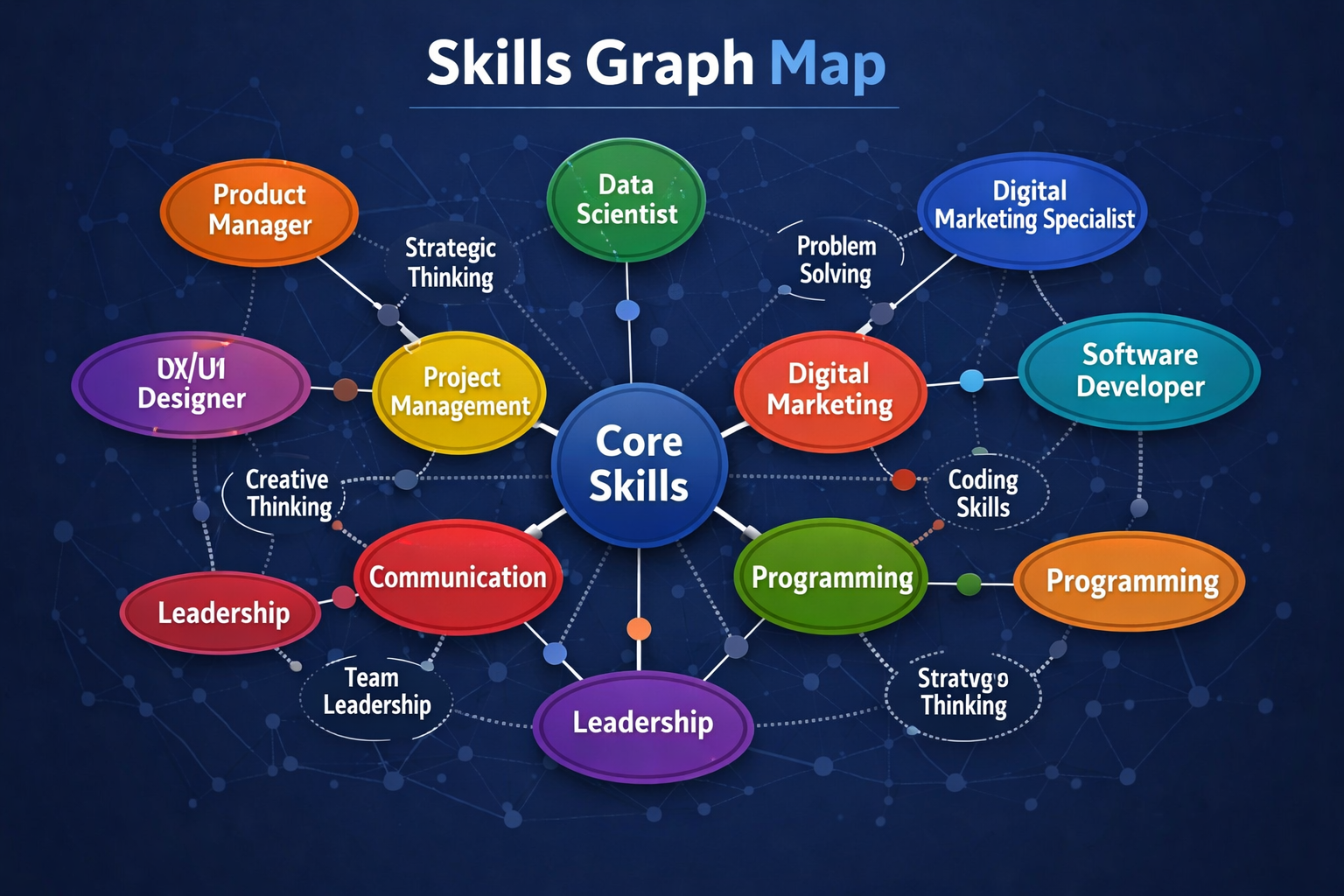
The world education environment is experiencing an enormous change. Old systems, which used to adhere considerably to degrees and standardized curriculum, cannot be relied upon as they are no longer relevant to the needs of an increasingly changing job market. Employers nowadays are more concerned with practical skills, flexibility and problem solving skills in the real world than fixed qualifications. This change has led to new models such as Skills Graphs and AI-assisted career mapping that seek to put education at the forefront of employability.
Skills Graphs offer an interconnected and organized perspective of skills, whereas AI career mapping applies the data-driven intelligence to help people choose the most relevant career routes. Collectively, they form a dynamic ecosystem, in which learning is tailored, lifelong, and aligned with future employment opportunities. This not only empowers learners, but also enables industries to tap into a better skilled workforce as well as job ready.
What is the Skills Graph?
A Skills Graph is a contemporary system that reflects the skills as interdependent nodes, as opposed to individual entities. It illustrates the relationship between various competencies and how the competency of one skill can bring the development of another.
The main elements of a Skills Graph.
- Skill nodes that are cross domain single competencies.
- Dependent and sequential relationships.
- The levels of proficiency to be used as an indicator of expertise between a beginner and advanced.
- Job relevance between competencies and the actual workplace tasks.
- Constant developments in keeping up with market requirements.
The relevance of Skills Graphs.
- Gives a good and well-organized learning roadmap.
- Helps enable learners to quickly recognize and close skill gaps.
- Saves time on irrelevant or out of date information.
- Makes education relevant to industry needs.
- Promotes life long learning and flexibility.
Artificial Intelligence Career Mapping: The Future.
AI career mapping is a new and sophisticated technology, which utilizes artificial intelligence to assist people in making informed career choices. It fuses user information, behavioral knowledge, and labor market patterns to prescribe the best career opportunities.
The way AI Career Mapping Works.
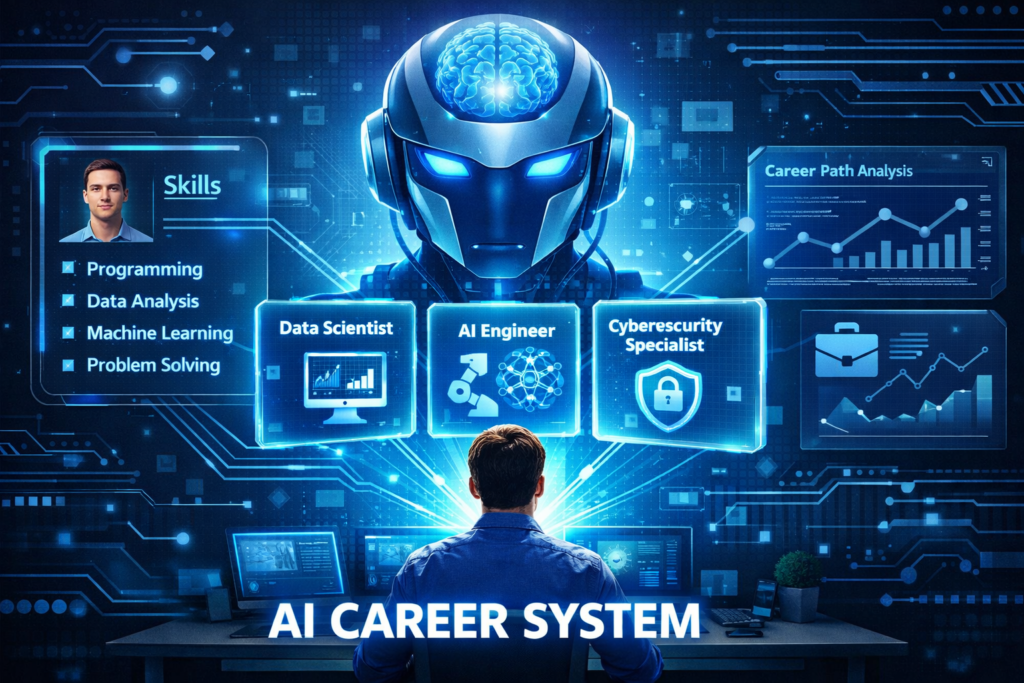
AI systems gather information in different forms, such as the ability of a learner, his/her interests, his/her previous performance and even his/her behavioral patterns. Such information is then processed with machine learning algorithms to determine trends and forecast the job requirements in the future. According to this analysis, it is possible to propose individual career paths and necessary skills and learning resources in the system. The system dynamically changes the recommendation as users advance and this keeps it in tune with both the market and the individuals.
The advantages of AI Career Mapping.
- Gives focus and direction to career planning.
- Reduces the possibility of selecting old or unimportant disciplines.
- Increases efficiency of learning based on specific recommendations.
- Helps with a smooth transition into career and upskilling.
- Informs users of new job opportunities.
The Co-operation of Skills Graph and AI.
Combining Skills Graphs with AI generates an extremely flexible and smart learning system. This combination guarantees that education is not only customized but also constantly in line with industry requirements.
Integrated Learning Ecosystem
The Skills Graph is used in this ecosystem to communicate with AI to monitor the progress of a learner and understand what competencies they are lacking. It will then suggest a course, project, or experience that can be used to fill those gaps. The system is dynamic and learners are kept abreast of the new skills needed. This strategy makes learning not a static process but a dynamic process that is dynamic to the market and the individual.
Real-World Applications
- EdTech solutions that provide adaptive and personalized learning opportunities.
- One of the areas is corporate training programs aimed at developing the skills of employees.
- Government programs that enhance the workforce preparedness.
- Reshaping curriculum in response to skills demanded by universities.
- Web based networks matching skilled professionals to opportunities.
Influence on the Education System.
The implementation of Skills Graphs and AI career mapping is transforming education systems worldwide into more flexible, efficient and relevant systems.
Degrees to Skills.
Competency-based education in which competencies are more important than degrees is gaining momentum. Employers are putting more emphasis on certifications, portfolios and real life experience. This change is pushing the learners to concentrate on attaining practical knowledge that would directly lead to their career objectives.
Personalized Learning Paths
With the aid of AI, it is possible to develop a personalized learning experience. Learners do not have to adhere to a definite curriculum; they have an opportunity to pursue their own directions which suit their interests and career goals. This individualization enhances the learning, retention, and learning outcomes.
Industry Collaboration
Schools are also working hand in hand with industries in order to come up with relevant curriculum. This will give the students the skills that are in demand, thus minimizing the disparity between education and employment. It also enables the companies to actively contribute to the future workforce.
Future Job Fit With Skills Graph.
The possibility to equip people with future employment positions most of which are yet to emerge is one of the greatest benefits of Skills Graphs.
New Job Roles were supported.
- AI Governance and Ethics Experts.
- Data privacy and cybersecurity professionals.
- Renewable Energy and Climate Technologies Engineers.
- Human-AI Interaction Designers
- Developers of Virtual Reality and Metaverse.
Future-Proofing Careers
Skills Graphs promote transferable skills like critical thinking, communication, and digital literacy. Such abilities are needed to cope with the new positions and sectors. With the emphasis on lifelong learning, people will be able to stay competitive and resilient amid the technological upheaval.
F&Q Section
1. What is a Skills Graph?
A Skills Graph is a system, which relates various skills and displays their interrelations with each other and other careers.
2. What is AI doing to enhance career planning?
AI interprets personal information and trends in the job market to provide recommendations on the most suitable careers and learning plans.
3. Is this system able to substitute the traditional degrees?
It is a supplement to traditional education, enhancing its skills focus, but does not entirely supplant degrees.
4. Who is going to be beneficiary of Skills Graph and AI mapping?
This system can be beneficial to students, professionals, job seekers and even organizations.
5. Can AI career mapping be trusted in the long-term?
Yes, however, it must be updated all the time and provided with the accurate data to be effective.