
Beginning.
A big change is waves in the automotive industry as the new technologies alter the functions of modern cars. Cars today are not simply modes of transport anymore. They are intelligent, receptive, and increasingly independent. They are intelligent, have seamless connectivity, and are automatic. This transformation is making the driving process safer and more convenient and establishing the foundations of a more efficient and sustainable future.
The change is being brought about by new safety features.
One of the most significant changes that technology has brought to cars in the past years is safety. Most vehicles are now equipped with the Advanced Driver Assistance System (ADAS). Automatic emergency braking, lane departure warning, adaptive cruise control, and the blind-spot monitoring are some of the features of these systems.
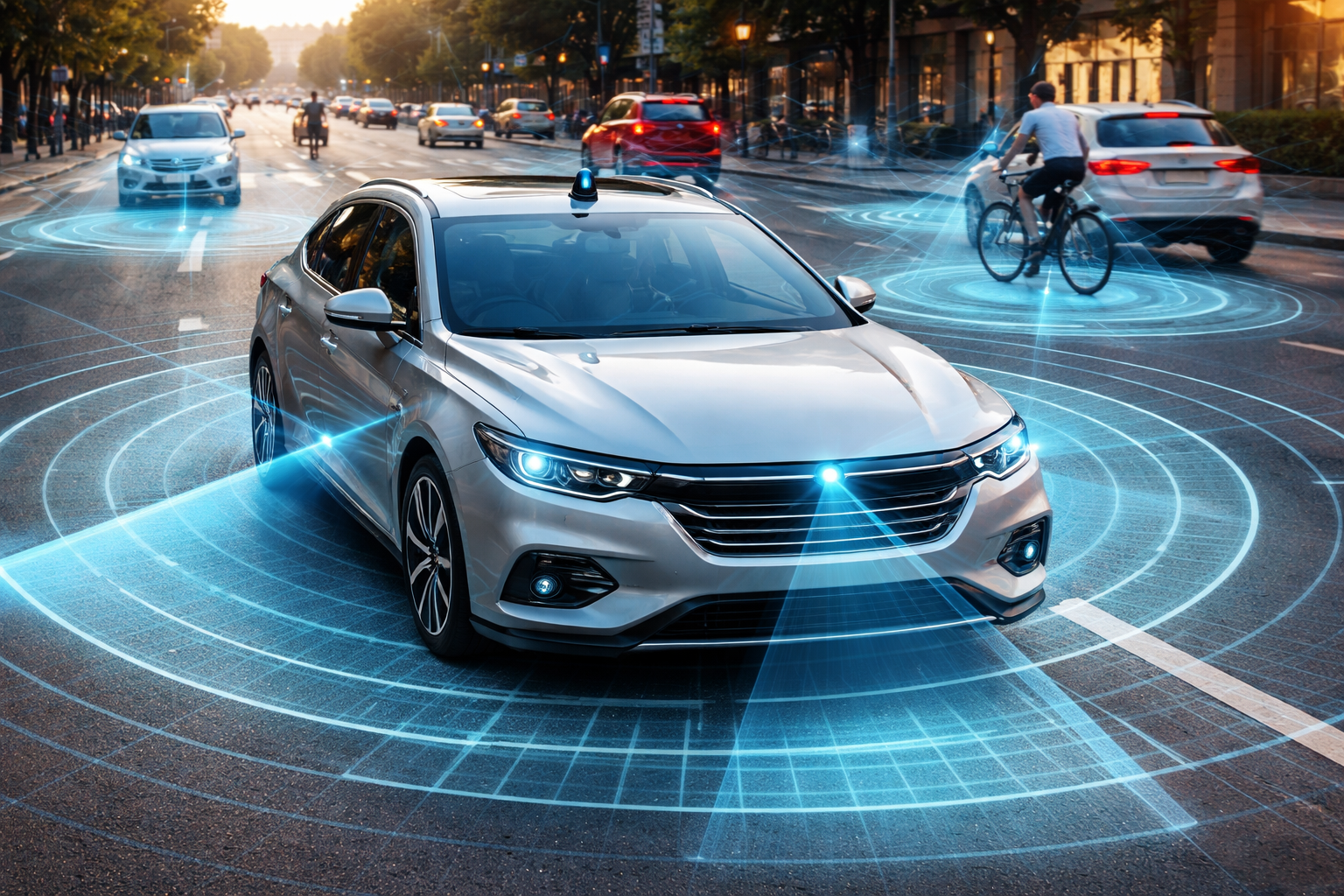
Such technologies track the surroundings of the car with the help of cameras, sensors, and radar in real time. By reading this information, the car can warn the drivers about the potential dangers or even take measures to prevent accidents. In the case of automatic emergency braking, an accident that is about to occur can be detected, and the car will be stopped sooner than a human being, which significantly reduces the risk of a collision.
Also, driver monitoring systems are being installed to detect fatigue or distraction. These systems monitor the eye movements and steering pattern of the drivers to ensure that they remain on course. Such new ideas are also contributing towards ensuring that the world is becoming a safe place since the road accidents and killings are reduced.
Intelligent Interconnection Systems and Entertainment.
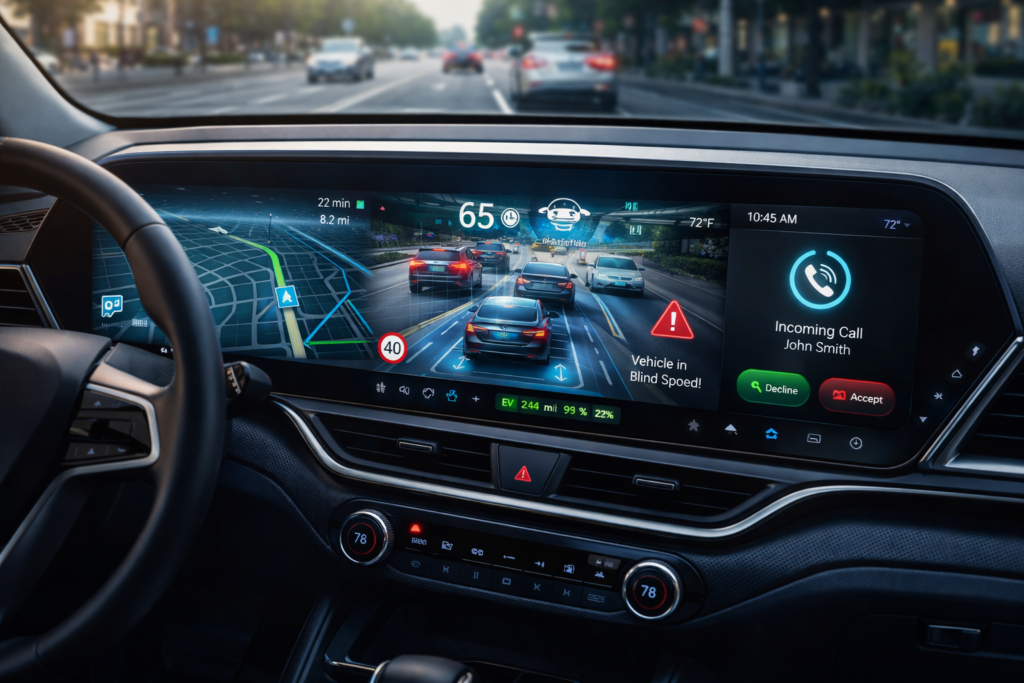
Increasingly, the modern automobiles are interconnected, and they include functions that can be complemented with smartphones and other digital gadgets. Infotainment systems are now standardized with touchscreens, voice recognition and integration of apps. This will allow the drivers to navigate, listen to music, make calls, and read messages without distraction.
Voice assistants enable you to manage things without the need to use your hands, and this makes them safer and more convenient. Simple voice commands allow drivers to switch climate, send messages or get directions. OTA updates are also used to ensure that the software in the car is always updated without necessarily visiting the service center.
Vehicle diagnostics is also included in connectivity. Smart cars are able to monitor the condition of their operation and remind their owners when they require servicing. This ensures that they will not disintegrate at any point in time.
Emerging Self-Driving Technology.
Self-driving cars are one of the most exciting new technologies that have taken place in the car world. Cars that are completely autonomous are not in development yet, and semi-autonomous functions are commonplace. Others are systems which park automatically, aid in driving on the highway, and aid in traffic jams.
Autonomous systems require artificial intelligence, machine learning, and plenty of data to determine the way to drive. The car is also able to pass through the complicated traffic scenario as it has cameras and sensors that provide its view a 360 degree view of its environment.
Regulatory and safety concerns are still yet to be resolved, but it has been demonstrated in this area that fully-autonomous vehicles might become a standard in the near future. This would reduce cases of human error, which contribute the greatest to car accidents.
Individualization Makes the Driving Experience More Fun.
Technology is also transforming the way individuals drive by introducing features, which are unique to individual people. The contemporary vehicles are capable of recalling such details as the favorite seat position of the driver, mirror, climatic regulation, and even a music playlist.
With AI, it is now feasible to have such predictive features, such as proposing routes based on how you tend to do things or changing settings depending on the weather. Cars even have biometric authentication which includes fingerprint or face recognition to unlock and start the car.
All these are aimed at making driving easier and more comfortable and they are designed to suit the needs of each individual.
New Electric and Sustainable Products Ideas.
Modern cars are also becoming more environmentally friendly due to the use of technology. The electric vehicles (EVs) are on the rise due to the improved batteries, charging facilities and energy efficiency.
Smart energy management systems utilize the maximum of battery life and extend the range you travel. The systems conserve energy as they brake and re-use it, a feature that increases the efficiency of the system in general. Further, related applications will enable users to see the state of their charge, as well as locate charging stations in the area.
These new concepts are not just reducing carbon emissions, but also making the world a better place to live in.
Data and Cybersecurity Protections.
With the increased use of connected cars in the marketplace, cybersecurity is slowly gaining a significant role. Car security has been enhanced in modern cars and it ensures that hackers and other unauthorized individuals with bad intentions are locked out.
Vehicle information remains secure due to the encryption tools, safety of communication protocols, and frequent software changes. Manufacturers are paying a lot of money on cybersecurity so as to win the trust of consumers and preserve confidential data.
What to Expect in the Future
To the future of car technology, it is even better. With the addition of 5G connectivity, cars can communicate with each other as well as with infrastructure. This will be intelligent traffic control and reduce traffic jams.
Emerging technology such as augmented reality dashboard, intelligent AI assistants, and self-driving cars will have a probable implication on the movement of people. The future of cars is a safer, smarter, and efficient car than ever before due to the advancement of technology.
Conclusion.
To sum up, the present-day cars are quickly turning into intelligent, connected, and highly secure machines due to technology. Premium safety systems are minimizing accidents and intelligent capabilities and connectedness are increasing convenience and general driving experience. The emergence of self-driving and eco-friendly advances only indicates the direction in which the industry is moving in the direction of safer and greener. As technological developments in the automotive industry keep changing, it will not only reinvent mobility, but it will also establish new benchmarks of automobile safety, functionality, and user-friendliness in the future.
Frequently Asked Questions (FAQs).
1. What are the Advanced Driver Assistance Systems (ADAS)?
ADAS are safety devices that are aimed at helping drivers to avoid accidents. They also have such features as adaptive cruise control, lane-keeping assist, and automatic braking.
2. Are self-driving cars devoid of drivers altogether?
Most vehicles currently on the road have some level of semi-autonomous features.
Complete driverless vehicles are being developed and tested in most parts of the world.
3. What are the ways in which driving safety can be enhanced by smart features?
Smart features detect and notify drivers of threats, and can even intervene in case of an emergency, and the sensors and AI can be monitored to reduce human error.
4. Is it possible to update car software remotely?
Yes, most of the modern vehicles are capable of receiving updates via the air, which will enable the manufacturers to enhance the features and correct bugs without taking the vehicle to the service.
5. Does connected car technology stay safe?
Manufacturers have good cybersecurity like encryption and highly secured networks to secure user data and stop hacking.