
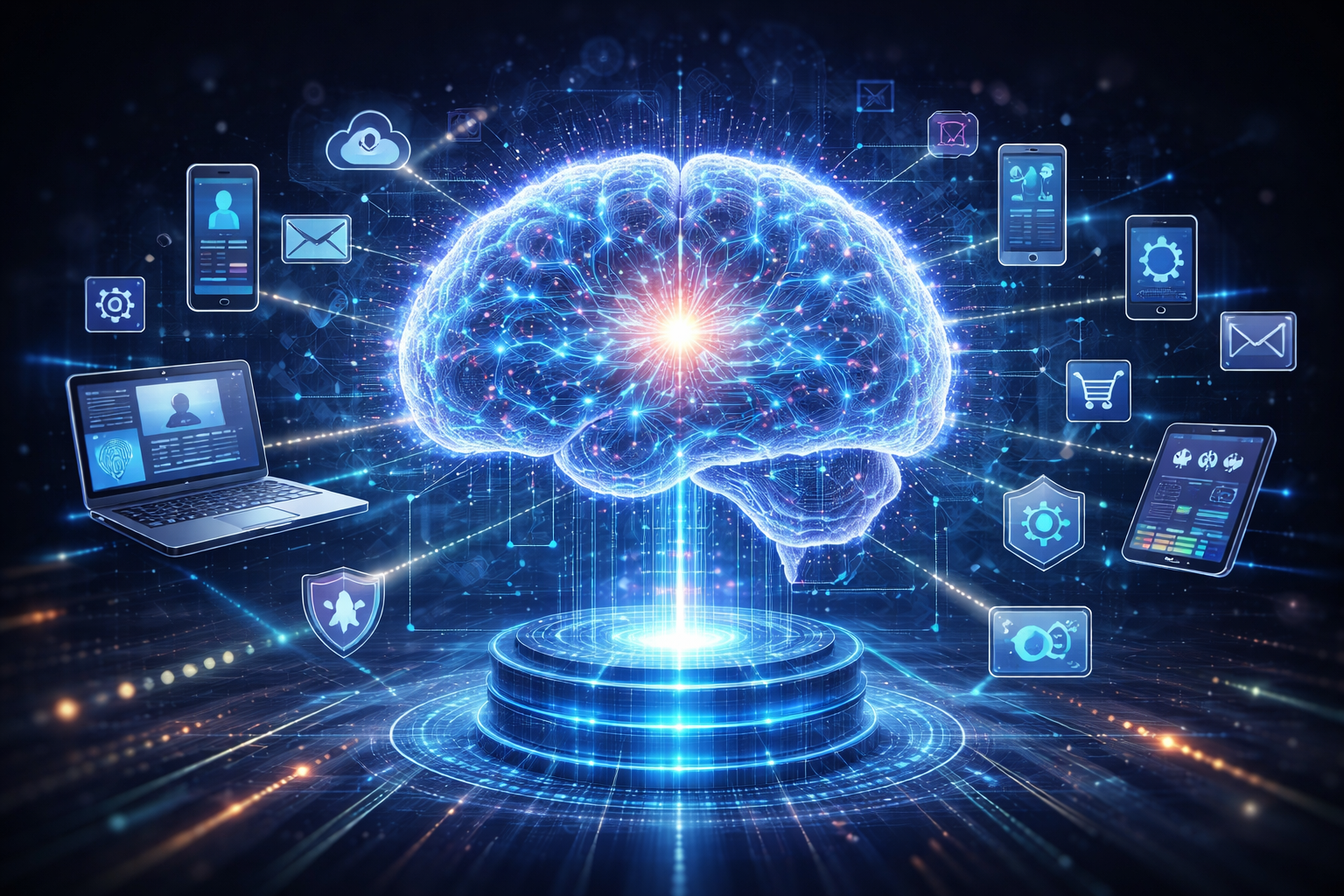
The internet is quickly becoming a smarter, more personalized place, in which AI learns users more than in individual interactions. The AI Memory Layer serves to power this transformation by enabling systems to remember contexts over time. AI is no longer starting with a blank slate in order to develop a consistent knowledge of users.
This change is turning digital experiences into a smoother and more human experience. Users are able to communicate freely without having to repeat what has been said over and over. Consequently, the internet is more natural and instinctive than ever.
What is an AI Memory Layer?
The AI Memory Layer is a system that allows artificial intelligence to store and remember information about previous interactions. It is like a memory computer that gets enhanced over time, getting acquainted with user behavior and preferences.
This memory is context-sensitive and adaptive as opposed to traditional tracking systems. It assists AI in providing more important, relevant, and accurate answers, and making interactions smarter and more efficient.
Important Characteristics of AI Memory.
Rewards previous discussions and user preferences to enhance answers.
Provides individualized services in accordance with long-term behavior.
Never stops learning and gets better every time he interacts.
Reduces the need for repetitive inputs from users
Improves accuracy through the deep learning of context.
The Internet is changing because of the presence of Persistent Memory.
Smarter Search Experiences
The process of search is no longer dependent on the use of keywords. AI can now learn what the users really want by interpreting previous behavior. This enhances accuracy of results and time saved when it comes to repetitive searches.
Users get quicker and more relevant answers without having to refine queries several times. With time, the search engines get more in tune with personal intent.
Hyper-Personalized Content
Content platforms are getting smarter and smarter by providing what people really desire to watch. AI memory will follow long-term interests and propose content based on them.
This lessens the amount of information overload and maximizes time on meaningful content by the users. It develops a personalized online space.
Conversational Interfaces
AI chatbots are becoming more conversational companions. They recall past conversations, likes, and even the style of communication.
This simplifies communications and makes them interesting. Discussions are more seamless instead of fragmented, and user satisfaction is enhanced greatly.
Improved Productivity Tools
AI-driven tools are getting more effective by recalling common work processes and habits of the user. They are able to propose actions, automate activities and lessen manual work.
This assists people and groups to be quicker and more productive. The productivity grows as AI becomes customized to particular user requirements with time.
AI Memory Layer across Various Industries.
E-commerce
Online shopping sites have AI memory that helps them determine the preferences and purchasing patterns of customers. This will enable them to suggest products with a greater chance of being bought by the users.
It enhances user experience and boosts sales and retention. The process of shopping is more personalized and convenient.
Healthcare
AI systems help to recall patient information, medical history, and treatment patterns. This assists healthcare providers to make improved choices within a short time.
It also enhances the treatment of patients through more precise and prompt insights. The system becomes more reliable and efficient with time.
Education
AI memory is applied in learning platforms to change according to the progress of each student. They find strong and weak points and modify material.
This leads to a customized learning process that enhances results. The students are able to study at their level with improved instructions.
Marketing
AI memory provides marketers with insights into customer journeys and preferences. The campaigns are more focused and contextual.
This enhances interaction and better payback. Companies are able to reach people by engaging them more.
Advantages of Continuous AI memory.
Better User Experience
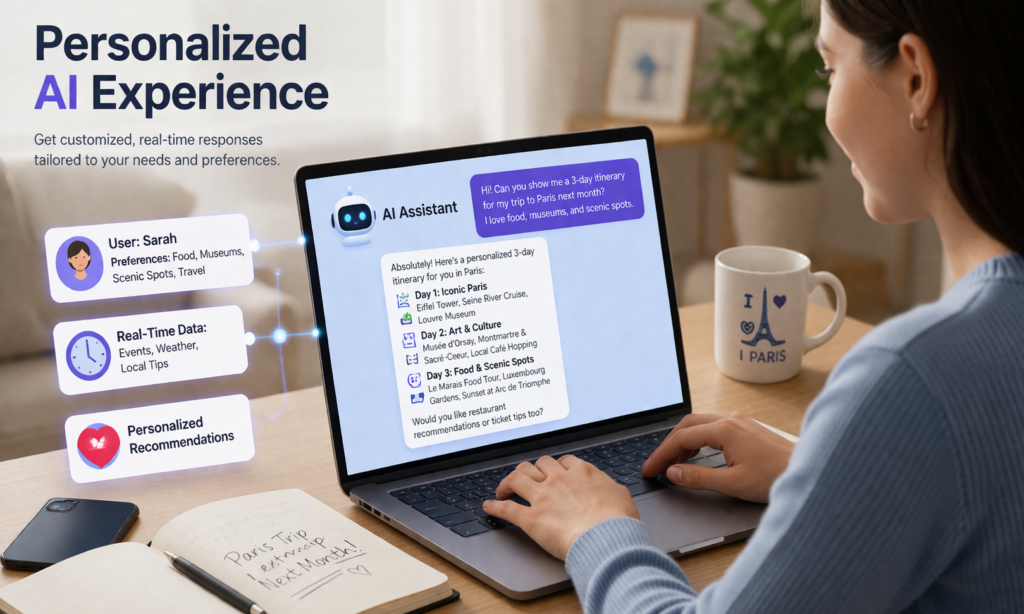
The interactions are also smoother since AI recalls the user preferences and previous entries. This minimizes redundancy and enhances comfort.
Technology becomes more user friendly, as the entire experience is quicker and more intuitive.
Increased Efficiency
Repetitive work can be automated with the help of AI that recalls work processes and user patterns. This will save time and enhance productivity.
Smart systems save time by reducing manual work to businesses and individuals.
Stronger Engagement
Individualized experiences make users more attached to sites. They feel appreciated and recognized.
This increases retention and increased engagement with the digital services.
Data-Driven Insights
AI memory can assist businesses gain a deeper insight into user behavior. This facilitates improved decision making and planning of strategies.
These insights can give organizations the ability to keep on improving products and services.
Future of AI Memory Layer.
Memory-Controlled AI
The user will have a greater control over what AI retains and loses. This will form a balance between privacy and personalization.
It will also establish confidence because users will be more confident about their data.
Cross-Platform Memory
AI memory will not be platform-specific. It will operate on apps and devices in a harmonious manner.
This will produce a seamless digital experience wherein all things feel interrelated.
Emotional Intelligence Integration.
Emotional context and data may be comprehended by future AI systems. This will make interaction more humane and human.
It will enhance communication and user satisfaction levels.
Decentralized Memory Systems.
The new technologies can enable the user to have full control of their data. This would decrease reliance on the centralized systems.
Conclusion.
The AI Memory Layer is making the internet more personalized and intelligent. It enables systems to learn about the users and deliver relevant experiences.
As this technology evolves, it will redefine how people interact with digital platforms. The future of the internet is memory-based AI that learns and gets better.
FAQs.
1. What is persistent AI memory?
The persistent AI memory enables systems to store user information and interactions. This assists in offering more personalized and pertinent experiences.
2. What is the difference between AI memory and cookies?
AI memory is more developed as it comprehends context and behavior. Cookies are only able to track limited session information without deep learning.
3. Does AI memory enhance productivity?
Yes, it assists in automating work and recalling workflows. This saves on manual work and enhances efficiency.
4. Does AI memory have inter-departmental functionality?
It is projected that future systems will be able to accommodate cross-platform memory. This will provide a smooth user experience on devices.
5. Why is AI memory important?
It makes online communication more intelligent and personalized. This enhances user experience and business results.